
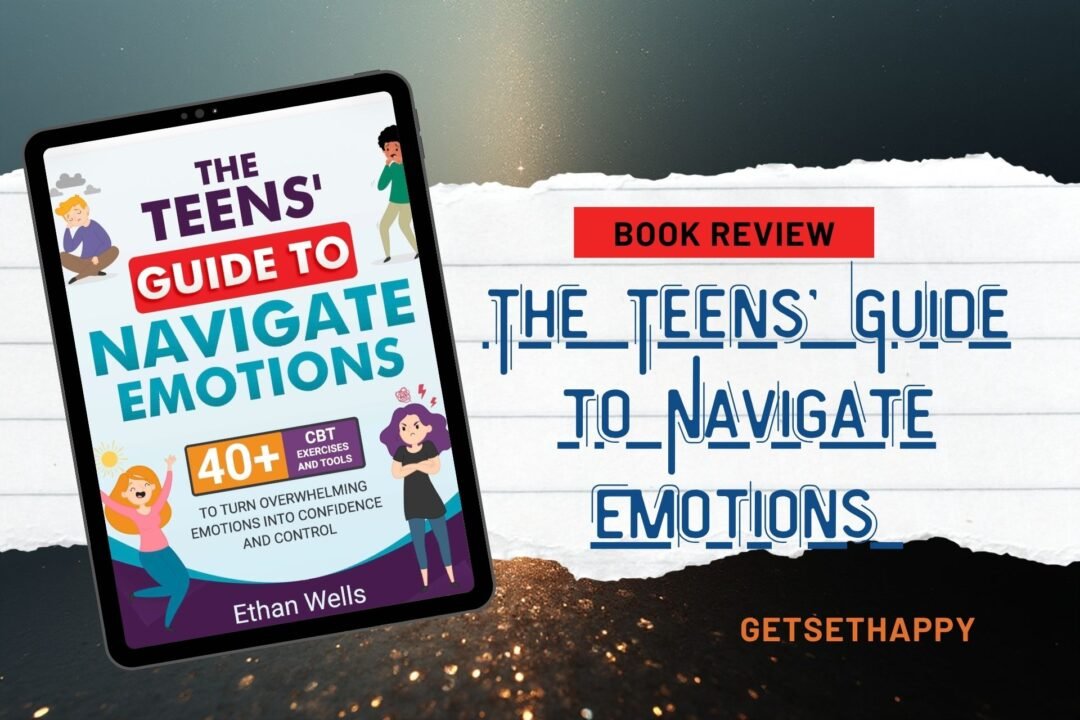
Being a teenager is complicated enough without having to figure out why you suddenly feel angry, anxious, overwhelmed, excited, insecure, or completely fine—all in the same afternoon. What I liked about The Teens’ Guide to Navigate Emotions is that it doesn’t treat these feelings as something teenagers simply need to “get over.” Instead, it begins with a reassuring idea: emotions can be understood, and emotional skills can be learned.
Written by Ethan Wells, the book combines explanations, reflection exercises, worksheets, and more than 40 CBT-based exercises and tools. The overall aim is to help teenagers turn overwhelming emotions into greater confidence and control.
Understanding Emotions Instead of Fighting Them
One of my favourite ideas in the book is the way it presents emotions as signals rather than enemies. Anxiety, anger and sadness may be uncomfortable, but they can also tell us something about what is happening inside us. The book encourages readers to pause, identify what they are feeling, and look for what triggered it rather than immediately reacting.
This is followed by practical activities such as Spot the Thought, where readers examine a difficult situation, identify thought patterns such as overthinking or self-blame, and then try looking at the situation from a more balanced perspective.
I appreciated this approach because the book doesn’t simply say, “Think positively.” It asks teenagers to actually examine their thoughts.
CBT Exercises for Stress, Anger and Anxiety
The book covers a wide range of situations teenagers may encounter, including anger, stress, anxiety, self-esteem, body image, communication and relationships. The table of contents itself shows how broad the book is, moving from understanding emotions and emotional intelligence to anger management, stress, anxiety, self-esteem and relationships.
The worksheets make the book especially interactive. For example, Managing Your Emotional Dashboard asks readers to identify which emotions were strongest in a stressful situation, recognise their triggers, notice their instinctive reaction and then think about a calmer response.
I also liked the book’s discussion of anxiety. Instead of promising a magical solution, it encourages small steps such as grounding, journaling and questioning anxious thoughts. The section on cognitive restructuring explains how patterns like worst-case thinking, extreme language and mind-reading can make anxiety feel even bigger.
A Practical Guide to Emotional Intelligence and Relationships
Another strength is that the book doesn’t stop at individual emotions. It moves into emotional intelligence, empathy, communication and boundaries. The relationship section reminds readers that listening builds trust, assertiveness helps us communicate clearly, and healthy boundaries can protect our time, energy and emotions.
The writing is conversational and supported by illustrations and plenty of spaces to pause and write. That makes it feel less like a conventional self-help book and more like a guided workbook a teenager can actually interact with.
I also appreciated that the book acknowledges that not every problem can be solved through a worksheet or a change in mindset. It recognises difficult circumstances such as family conflict, discrimination, financial stress, grief and unsafe environments, and encourages readers to seek support from trusted adults or professionals when needed.
I found The Teens’ Guide to Navigate Emotions to be a practical and accessible resource for teenagers who are trying to make sense of their emotional world. It doesn’t promise that difficult feelings will disappear. Instead, it teaches the more useful lesson that we can learn to notice our emotions, understand our thoughts and choose our responses. For teenagers, parents, educators or anyone looking for an approachable introduction to emotional intelligence and CBT-based self-reflection, this book could be a useful addition to the shelf. The book is all set to live on 10th October. Find out more about this book on Author’s website.
About the Author
Ethan Wells is the author of The Teens’ Guide to Navigate Emotions: 40+ CBT Exercises and Tools to Turn Overwhelming Emotions into Confidence and Control. The book presents his work as a practical collection of CBT-based exercises and tools designed specifically to help teenagers understand and manage emotions.


No Comments