
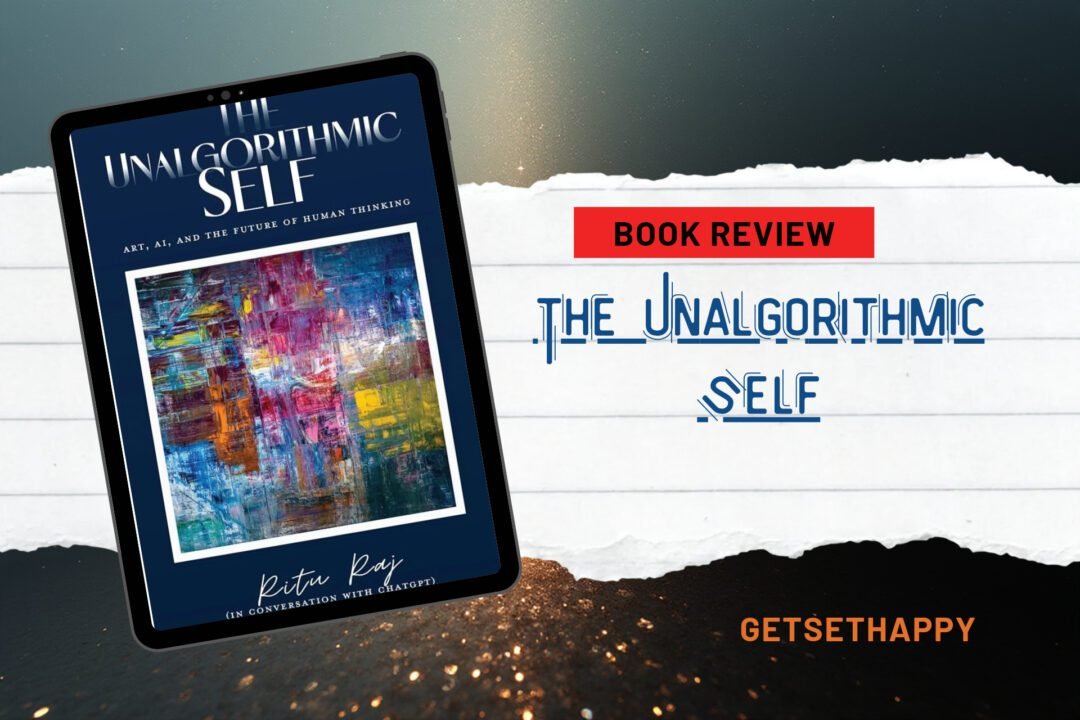
We live in a world where machines can write stories, create artwork, answer questions and even hold conversations that feel surprisingly human. Technology is advancing faster than most of us can keep up with. But somewhere in this race towards smarter machines, have we stopped paying attention to what makes us human? This is the question that immediately caught my attention when I picked up The Unalgorithmic Self by Ritu Raj.
Understanding the Human Self in the Age of Artificial Intelligence
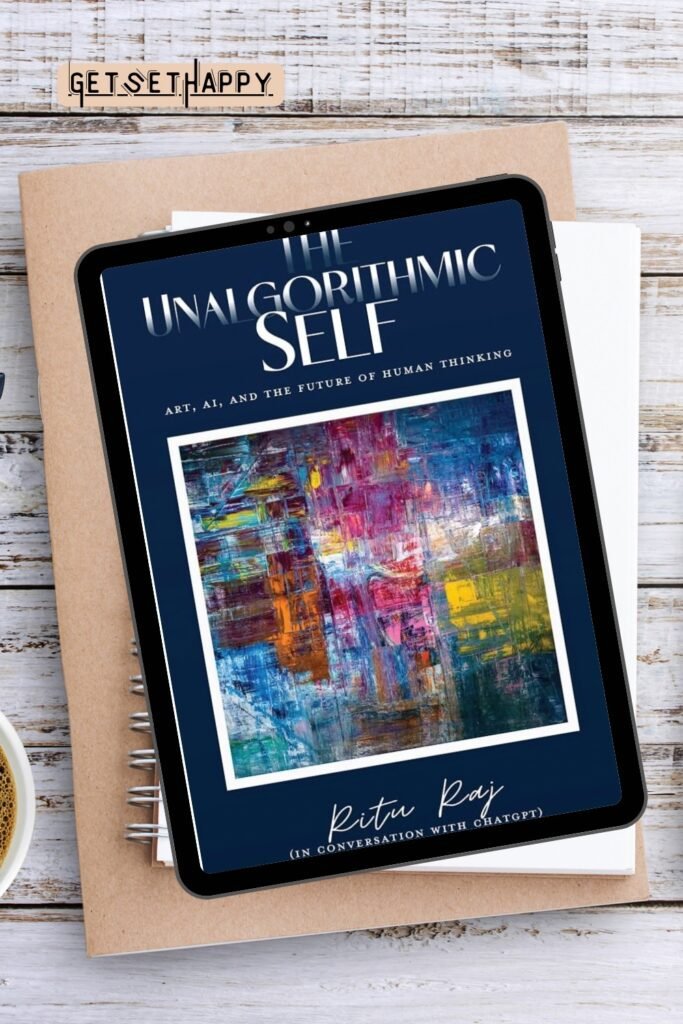
This book explores an interesting idea: while machines can imitate many aspects of human intelligence, they cannot experience life the way we do. They can generate words about love, grief or happiness, but can they actually feel any of these emotions?
The author believes that what makes us human goes far beyond intelligence, productivity or the ability to process information. It lies in our experiences, memories, emotions, imagination and the relationships we build along the way.
What I particularly liked is that the book doesn’t approach artificial intelligence as an enemy. Instead, it encourages us to understand its capabilities while remaining aware of its limitations. The real danger, according to the author, isn’t necessarily that machines will become more intelligent, but that humans might gradually forget the importance of their own inner world.
That’s an interesting perspective and one worth thinking about.
Why Emotions, Memories and Creativity Still Matter?
One of the strongest aspects of this book is how it explores different dimensions of human existence.
The chapters on emotions, memory, imagination and identity make you look at ordinary human experiences differently. For instance, the author explains how memory isn’t simply about storing information. It is about revisiting our experiences and understanding them differently as we grow.
I also enjoyed the discussion around emotions. We often treat emotions as something that gets in the way of logical thinking, but the author presents them as an important part of how we understand the world and decide what matters to us.
The book also explores relationships, love, vulnerability, consciousness, creativity and the importance of human connection. These aren’t just philosophical topics here; they all connect to the larger question of what we should protect as technology becomes more deeply involved in our lives.
A Different Perspective on Technology, Art and Human Thinking
What makes Ritu Raj’s perspective particularly interesting is his background. Having spent decades working in technology and building companies, he also has a deep connection with abstract art and philosophy.
This combination reflects throughout the book. He brings together ideas from philosophers such as Martin Heidegger, Hannah Arendt, Emmanuel Levinas and Martha Nussbaum to explore the relationship between human experience and artificial intelligence.
I also appreciated the author’s openness about using ChatGPT during parts of the writing process. Rather than hiding this collaboration, he acknowledges it and explains how the tool helped sharpen his ideas without replacing his thinking. Given the subject of the book, I found this particularly interesting.
The writing is thoughtful and detailed, although some sections can feel a little dense, especially if you’re not familiar with philosophical discussions. Certain ideas also reappear across chapters. However, readers who enjoy reflective nonfiction will probably appreciate the depth.
Is The Unalgorithmic Self Worth Reading?
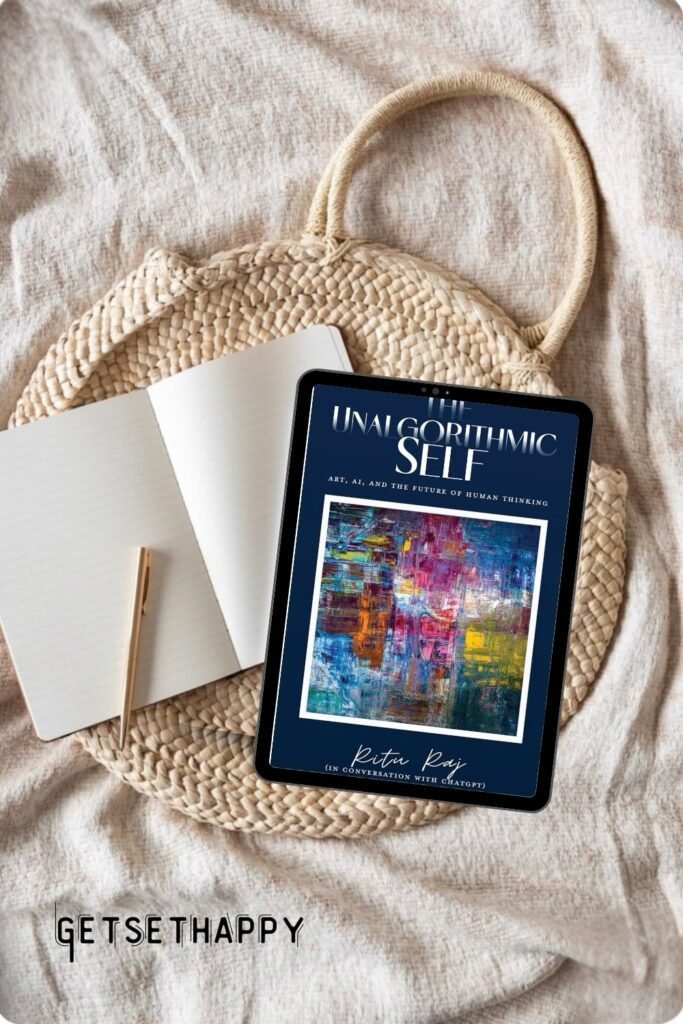
I would recommend this book to readers interested in artificial intelligence, philosophy, human psychology, creativity and the future of technology.
This isn’t a practical guide to using AI or a technical explanation of how machines work. It’s more of an invitation to pause and examine our relationship with technology and, more importantly, with ourselves.
My biggest takeaway is that progress shouldn’t come at the cost of our humanity. We can embrace technology, use intelligent tools and enjoy the convenience they bring without allowing them to replace our ability to think, feel, imagine and connect.
In a world obsessed with becoming faster, smarter and more efficient, perhaps we need a reminder that not everything valuable can be measured or optimized.
And that’s what The Unalgorithmic Self leaves me thinking about. This super-inspiring book is available for purchase on Amazon: The Unalgorithmic Self by Ritu Raj.
About the Author
Ritu Raj is an abstract artist, thinker and writer whose work explores the relationship between consciousness, creativity and technology. Born in New Delhi, he studied mathematics and computer science and spent several decades building companies and designing digital systems before returning to his passion for art. He currently lives and works in Phoenix, Arizona, where he continues to explore the human experience through painting, writing and philosophical inquiry. You can learn more about his work at www.rituart.com.


No Comments