
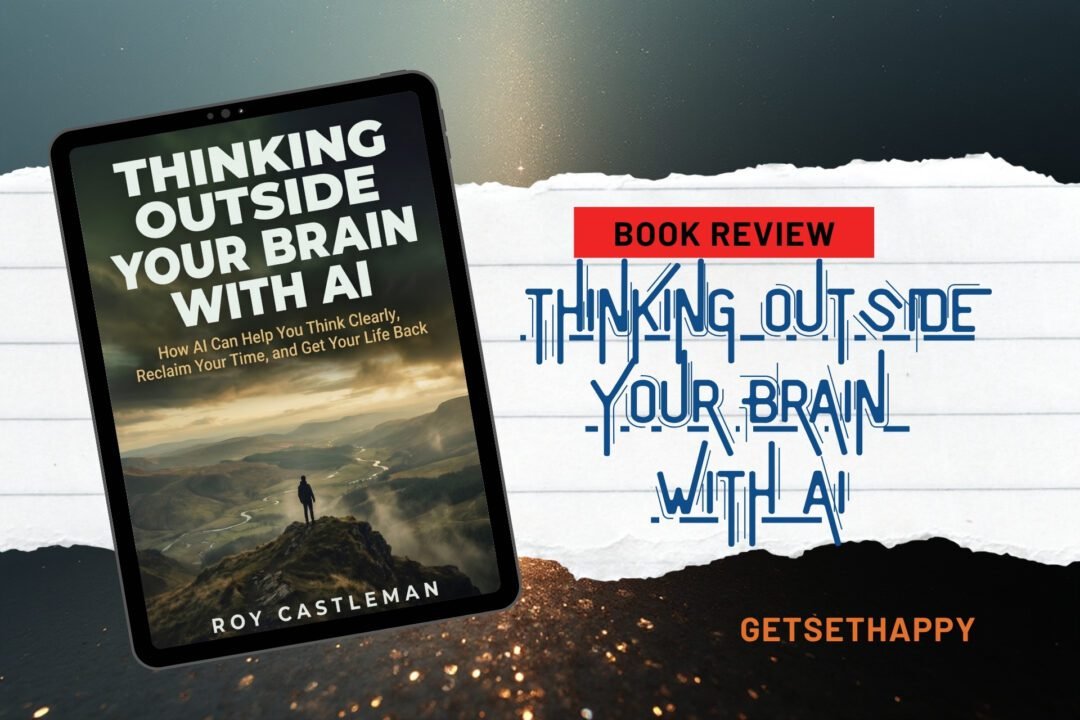
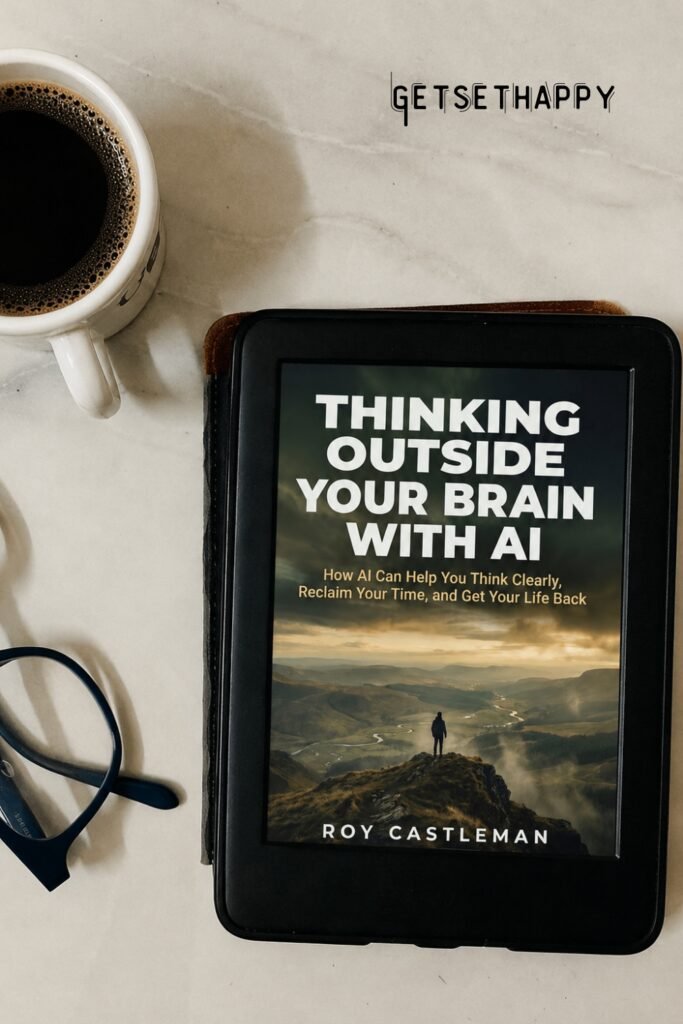
I have read quite a few books about artificial intelligence lately, and honestly, some of them start sounding the same after a while: use this tool, learn that prompt, automate this task, and stay ahead of the AI revolution. Thinking Outside Your Brain with AI took a different route, and that is probably what I liked most about it.
Roy Castleman isn’t trying to convince us to collect more AI tools. Instead, he asks a much more useful question: What if we stopped trying to carry everything inside our heads?
That idea runs through the entire book. The author argues that our brains are being overloaded with information, decisions, unfinished tasks, business problems, and constant mental noise. AI, when used properly, can help take some of that load away—not by replacing human thinking, but by giving our thinking somewhere else to live.
AI Is Not the Point—Better Thinking Is
This was the biggest takeaway for me.
Castleman is very clear that this isn’t a book about learning the latest AI software. Tools change constantly, and today’s favourite platform could be tomorrow’s outdated technology. His focus is on developing a way of thinking that remains useful regardless of which AI tool we happen to use.
I particularly enjoyed this approach because it takes away some of the pressure surrounding AI. I don’t need to know every new tool. I need to know what problem I’m trying to solve, what I want from the tool, and when I need to step in with my own judgement.
And that last part matters.
Castleman repeatedly reminds us that AI can sound confident while being wrong. Human judgement is still the quality control.
The EVOLVE Method Makes AI Practical
The heart of the book is the EVOLVE method, a six-step thinking system:
E — Empty Your Head
V — Voice the Problem
O — Organise Your Thinking Partners
L — Listen Critically
V — Verify the Human
E — Elevate Your Edge
I liked that the framework doesn’t feel tied to one particular AI platform. It starts with something as simple as getting everything out of your head before trying to solve a problem. From there, you define the problem clearly, bring in the right expertise, challenge the answers you receive, make sure the final output still has your human fingerprint, and finally step back to see the bigger picture.
The book becomes even more useful towards the end, where the EVOLVE Workbook turns these ideas into exercises. For example, one exercise asks readers to look at their business as if it had a virtual leadership team—including finance, marketing, HR, operations and legal—and use AI to challenge decisions they have been avoiding.
That made the book feel less like something I was simply reading and more like something I could actually use.
The Human Stories Make the Book Work
For me, the personal stories are what stop this book from becoming another dry AI manual.
Castleman openly talks about burnout, the pressure of running businesses, and the uncomfortable realisation that something built to provide freedom can eventually become a prison. One of the most memorable stories involves his daughter, when he physically made it to her school play but mentally remained stuck in work.
That story gives the book an emotional centre.
His own journey with AI is equally interesting. He describes trying hundreds of tools, abandoning some, changing platforms and eventually realising that the tool wasn’t the real variable. His thinking was.
I also appreciated his honesty about using AI to help create this very book. As someone with dyslexia who describes himself as a storyteller rather than a traditional writer, Castleman explains how voice technology and AI helped him get his thoughts from his head onto the page.
My Take: A Useful AI Book for Business Owners
I would recommend Thinking Outside Your Brain with AI particularly to entrepreneurs, business owners and professionals who feel overwhelmed by the sheer number of AI tools and possibilities.
What I liked most is that the book doesn’t make AI sound like magic. It treats it as a thinking partner—and puts the responsibility firmly back where it belongs: with the human.
The message I walked away with is simple: don’t chase every new tool. Learn how to think with the tools you have.
The book also ends on a surprisingly human note. The author returns to the idea of being present with the people who matter, reminding readers that the real goal isn’t simply to become more productive. It’s to reclaim the mental space to decide, connect, create—and actually be present. Grab your copy of the book here –> Thinking Outside Your Brain with AI by Roy Castleman
About the Author
Roy Castleman is an entrepreneur, creator, and business coach who was born in Zimbabwe, grew up in South Africa and moved to the UK in 1997. He built and grew several businesses, including IT companies, before experiencing severe burnout following the collapse of Twinwoods Adventure during a period of major disruption. That experience led him towards breathwork, nervous-system work and coaching entrepreneurs. His extensive experimentation with AI and his own experience of using it to overcome the limitations he faced as a dyslexic creator form the foundation of Thinking Outside Your Brain with AI.



No Comments