
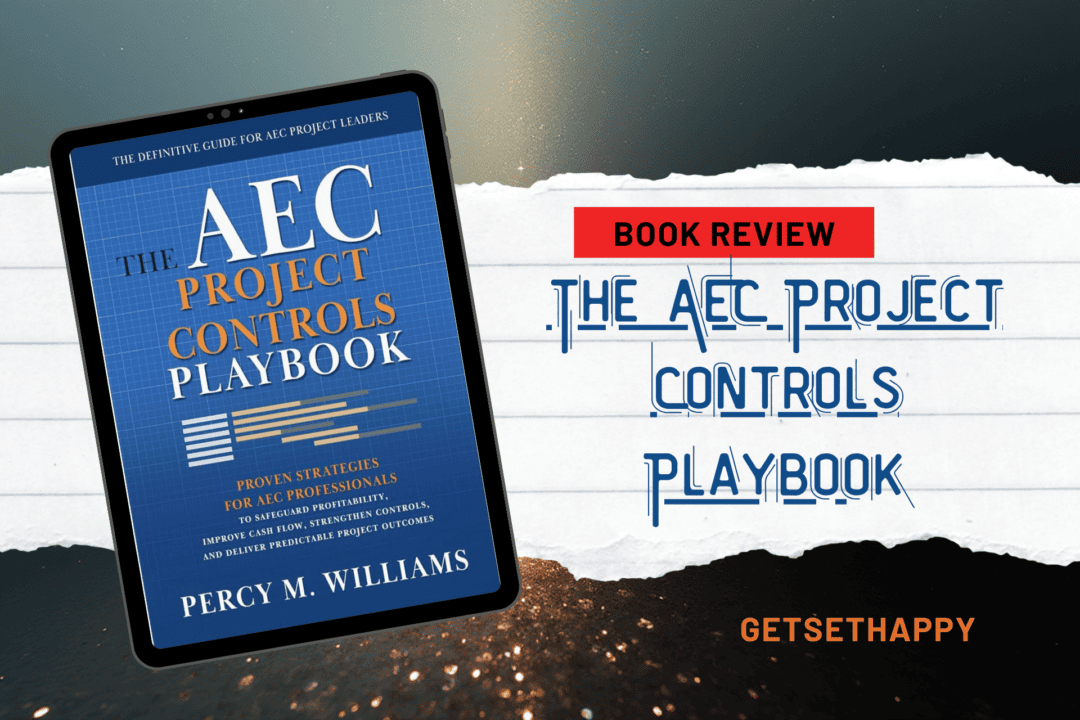
A profitable project can look perfectly healthy on paper and still leave a company struggling for cash. That idea stayed with me while reading The AEC Project Controls Playbook. At first glance, this may look like a very specialised book meant mainly for people working in architecture, engineering, and construction. And honestly, it is. But underneath all the accounting terms, financial controls, and project-management concepts is a much bigger message: good projects don’t happen through technical skills alone; financial discipline and good leadership matter just as much.
Percy M. Williams draws on more than two decades of experience in project accounting and controls to explain how AEC companies can protect profitability, improve cash flow, reduce financial risk, and make project outcomes more predictable. The book is specifically aimed at accountants, project managers, project controllers, program managers, and finance leaders.
Project Controls and Cash Flow Management in AEC
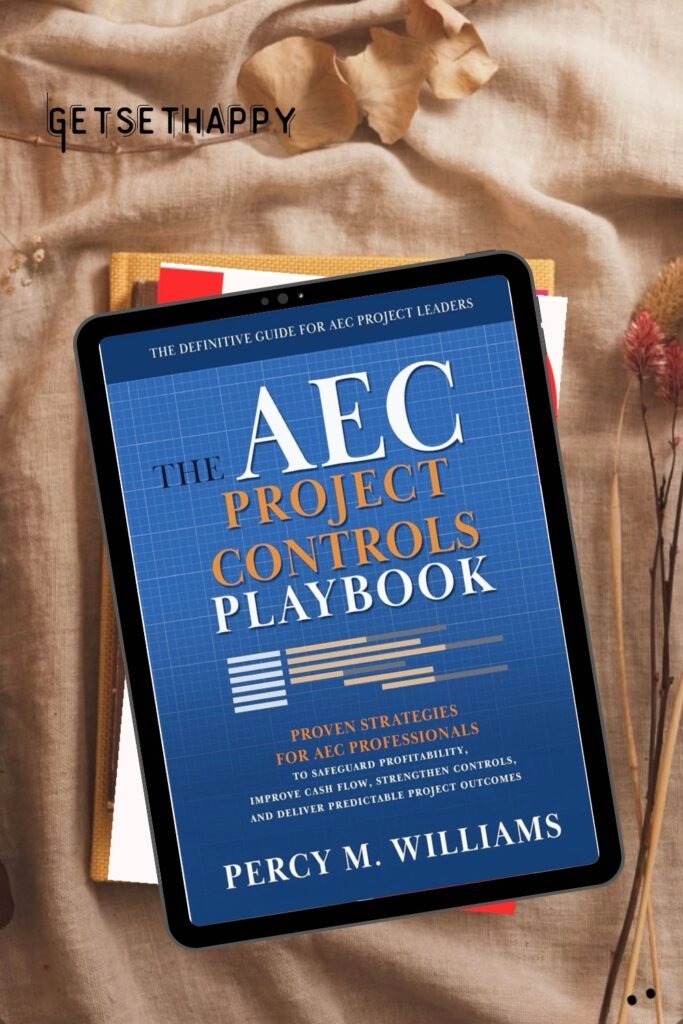
One of the strongest ideas in the book is the difference between profitability and actual cash flow. I found this particularly interesting because it is easy for businesses to celebrate revenue and profit without paying enough attention to when the money actually reaches the bank.
The opening chapters explain cash-basis and accrual accounting, working capital, accounts receivable, DSO, WIP, and the cash conversion cycle. But the author doesn’t simply throw definitions at the reader. He uses fictional project scenarios and numbers to show how delays in billing and collections can create real operational pressure, even when a project appears profitable.
The discussion around the cash conversion cycle is especially useful. Williams treats it not as a back-office accounting exercise but as something that project managers and business leaders need to understand and actively manage.
Protecting Project Profitability Through Better Controls
Another section I appreciated was the focus on project controls as a way of protecting profit rather than simply reporting numbers.
The book looks at billing practices, project accounting, change orders, contract terms, subcontractor commitments, forecasting, and margin erosion. It repeatedly brings the conversation back to accountability. For example, the author stresses that projects should not begin without authorised funding and that supplier commitments should be aligned with approved budgets and project-control oversight.
I liked this practical approach because the advice isn’t presented as complicated theory. Much of it comes down to something surprisingly simple: know your numbers, understand your contract, don’t ignore warning signs, and don’t wait for a financial problem to become a crisis.
The 4 Cs of Leadership and the Human Side of Projects
What makes this book more interesting than a purely technical project-controls manual is its attention to people.
Williams introduces the 4 Cs of Leadership—Character, Competence, Courage, and Communication—and connects them with accountability, employee retention, and financial performance. The book makes the point that even the best systems cannot compensate for poor leadership or a lack of ownership.
I also found the discussion around project manager turnover and the role of project accountants and controllers quite valuable. The author presents these professionals as more than people who maintain financial records; they can provide continuity, identify risks early, preserve institutional knowledge, and become strategic partners in project success.
AI in AEC: Technology With Human Judgment
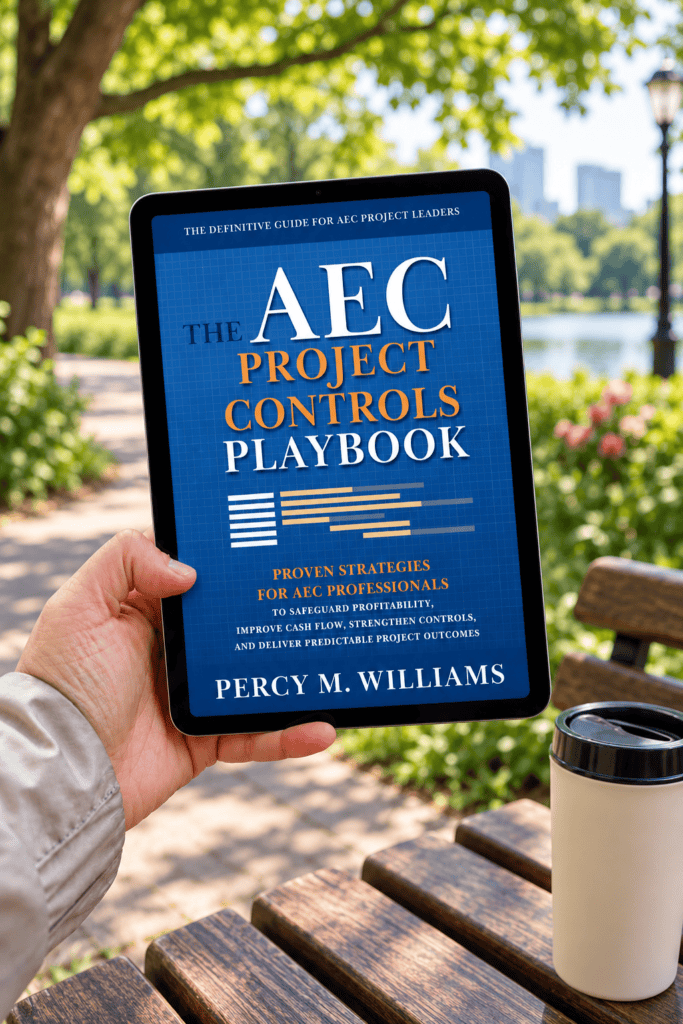
The later chapters bring the book into the present with a discussion of AI in project controls. Williams explores practical applications such as forecasting cost overruns, identifying budget variances, analysing labour burn rates, spotting billing anomalies, predicting collection delays, and monitoring cash conversion.
What I liked most is that the author doesn’t treat AI as a replacement for people. His argument is essentially that technology can provide better information and faster analysis, but humans still have to exercise judgement, accountability, and leadership.
Overall, I found The AEC Project Controls Playbook to be a focused, practical, and experience-driven book. It won’t be a casual read for someone unfamiliar with AEC terminology, and it is clearly written for a professional audience. But for project managers, accountants, controllers, and AEC leaders, it offers a useful collection of frameworks, examples, financial concepts, and lessons from real-world experience. The final chapter, which brings together Williams’ 20 years of lessons learned, gives the book an especially practical finish. My biggest takeaway was simple: a project doesn’t become successful just because the numbers look good. Someone has to actively protect those numbers.
You can get the copy of this quick yet valuable book on Amazon —> The AEC Project Controls Playbook.
About the Author
Percy M. Williams is a Strategic Financial Leader and Subject Matter Expert Project Controller with more than 20 years of experience managing high-stakes fixed-price and cost-reimbursable contracts across Architecture, Engineering, Renewable Energy, and Life Sciences. His career includes work with major AEC organisations such as AECOM, as well as involvement in projects including the California High-Speed Rail Project and Colton Crossing Flyover Project. He has also led a 15-member project billing team responsible for more than $240 million in annual billings and cash collections. Williams is a retired U.S. Marine and, through this book, aims to help project leaders strengthen financial discipline, protect profits, improve cash flow, and deliver projects with integrity.




No Comments