
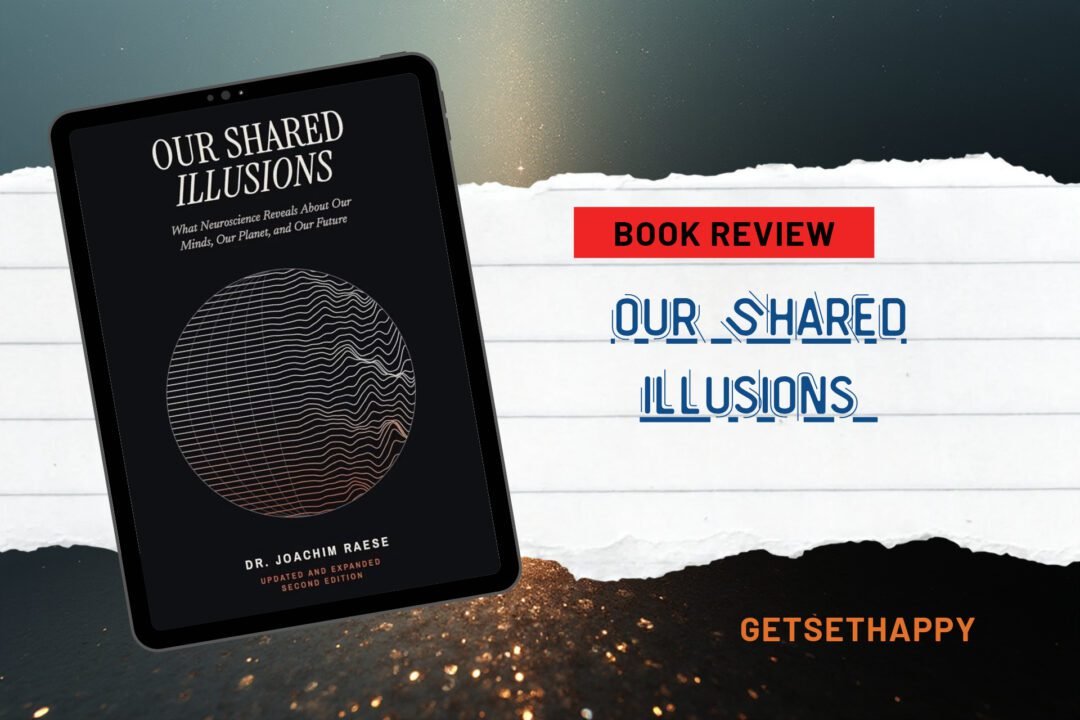
Have you ever wondered why we keep making decisions that aren’t necessarily good for us, even when we know better? Why do we get distracted so easily, hold on to beliefs without questioning them, or chase things that never seem to bring lasting happiness? What if the answers lie somewhere inside our brains? These are some of the fascinating questions raised in Our Shared Illusions: What Neuroscience Reveals About Our Minds, Our Planet, and Our Future by Dr. Joachim Raese.
This isn’t just another book about understanding the human brain. It takes a much wider look at how our minds work, how they influence our behaviour, and how our individual thinking patterns can shape the future of humanity.
Understanding the Human Brain: Are Our Beliefs Really Our Own?
One of the most interesting ideas in the book is that our perception of reality isn’t always as straightforward as we think. We tend to believe that our brains simply receive information from the world around us. However, the book explains how the brain actively builds its own version of reality using past experiences, expectations and predictions.
The chapters on dualism, perception and consciousness challenge some deeply rooted assumptions about who we are and how we experience the world. The author explores the idea that even our sense of self may be more of a construction than we realise.
I found this particularly thought-provoking because it encourages readers to question things they usually take for granted.
Neuroscience, Dopamine and the Never-Ending Search for Happiness
Another section that caught my attention was the discussion around the Default Mode Network and the hedonic treadmill.
We often complain about being distracted, constantly checking our phones or finding it difficult to stay present. The book connects these everyday experiences with the way our brains function. It also explains how dopamine plays a role in reward-seeking behaviour and why wanting something doesn’t always translate into enjoying it.
The discussion around social media, addiction and our constant search for satisfaction feels especially relevant today. It makes you think about how much of our attention is being influenced by systems designed to keep us wanting more.
And perhaps the bigger question is this: are we really in control of what we want?
From Human Behaviour to Climate Change and Artificial Intelligence
What makes this book stand out is how it moves beyond individual psychology and connects our mental limitations with larger global challenges.
The author explores how tribal thinking, political beliefs, storytelling and our tendency to favour familiar ideas influence society. He also examines humanity’s long history of conflict and how these patterns continue to shape our world.
The discussions on climate change and artificial intelligence are particularly important. The book draws an interesting connection between our inability to recognise long-term dangers and the cognitive limitations that prevent us from responding effectively.
The second edition also expands its discussion of artificial intelligence, making it especially relevant in a time when technology is advancing faster than many of us can fully understand.
Can Understanding Our Minds Help Us Build a Better Future?
After examining so many problems, the book eventually turns towards possible solutions.
Dr. Raese discusses the need to rethink endless economic growth, build stronger institutions that account for human limitations, and develop what he calls a consciousness culture. Meditation, education and a deeper understanding of our own minds form an important part of this discussion.
I particularly liked that the book doesn’t simply point out what is going wrong. It also encourages readers to think about what could be done differently.
Our Shared Illusions is an intellectually stimulating read that brings together neuroscience, psychology, philosophy, history, climate change and artificial intelligence. It is detailed, research-driven and occasionally challenging, especially for readers who aren’t familiar with scientific terminology. However, those willing to spend time with its ideas will find plenty of interesting perspectives to explore.
I would recommend this book to readers interested in neuroscience, human psychology, philosophy, technology and the bigger questions surrounding our future. It may not be a quick, casual read, but it certainly gives you plenty to think about long after you’ve put it down. Get this surprisingly interesting book on Amazon- Our Shared Illusions by Dr. Joachim Raese.
About the Author
Dr. Joachim Raese is the author of Our Shared Illusions: What Neuroscience Reveals About Our Minds, Our Planet, and Our Future. In this second edition, he substantially revises and expands the original work, bringing together neuroscience, psychology, philosophy and contemporary global challenges to examine how the human mind influences both individual behaviour and the future of society.



No Comments