
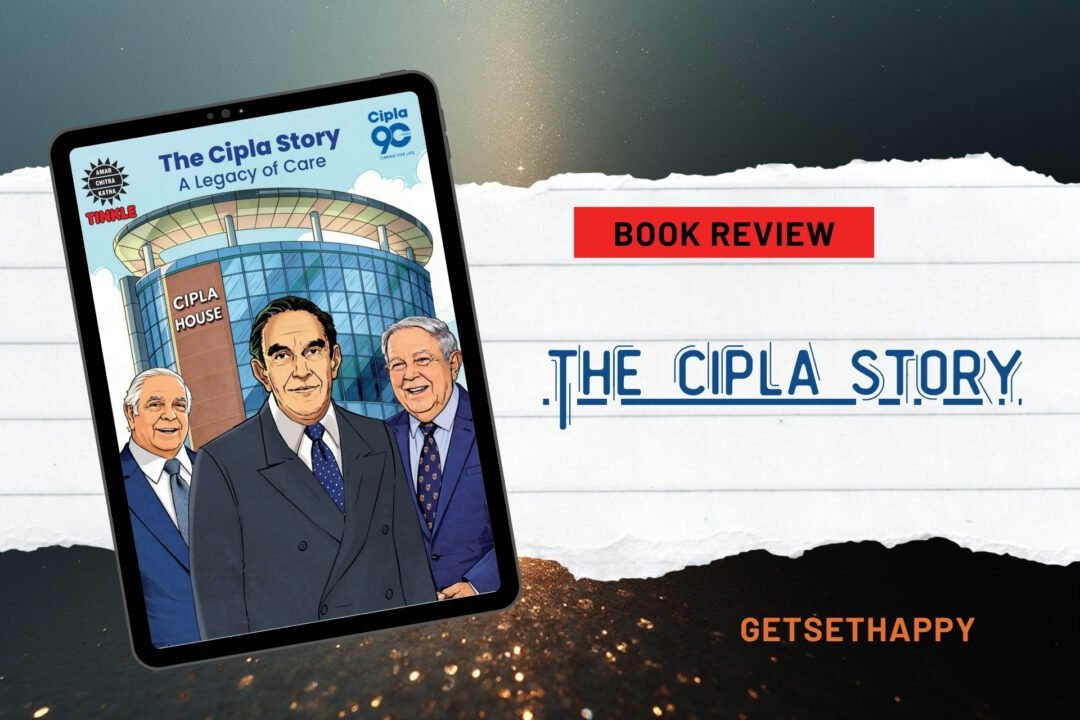
As a book lover, I am fond of both fiction and non-fiction, and following my love for these genres, I’ve read quite a few books about healthcare, medicine, and the people behind them. But now and then, a story makes you stop and changes your perception of healthcare in India. And this book is one among many.
Rather than focusing on medical jargon or business milestones, it brings together moments where healthcare feels deeply human. Through simple illustrations and relatable storytelling, it highlights the people behind important healthcare decisions—patients, caregivers, researchers, and those working to make treatment more accessible.
A Story That Looks Beyond Medicine
What stood out to me was how simply the story unfolds. It doesn’t try to make every moment feel monumental. Instead, it walks through Cipla’s journey by exploring the challenges, choices, and people behind it.
The illustrations are vibrant and easy to follow, making topics such as patents, affordable medicines, HIV/AIDS treatment, thalassemia, asthma care, and palliative care approachable without losing their significance.
As I read, it felt less like a company timeline and more like a collection of stories centred on people and the role healthcare plays in their lives.
One story that stayed with me focused on HIV/AIDS. It explores a time when life-saving medicines remained out of reach for many because of their cost. The story follows Dr. Yusuf Hamied and his team’s decision to make affordable HIV medicines available to developing countries, presenting it as a response to a healthcare challenge rather than simply a business decision.
That perspective lingered with me even after I had finished the book.
Putting Patients at the Centre
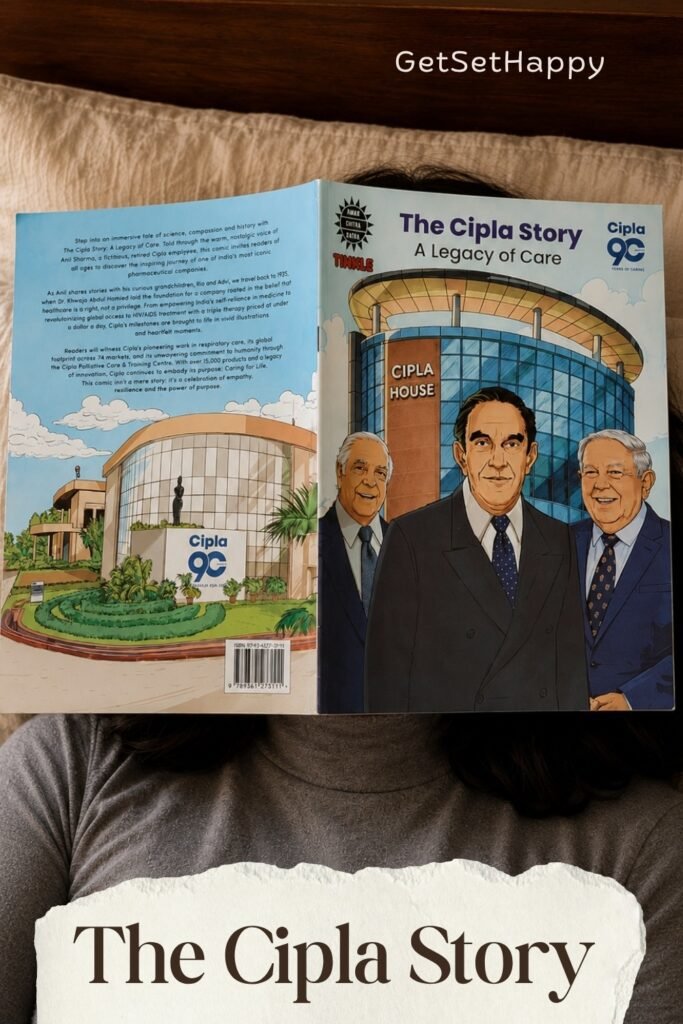
A recurring idea throughout the book is a simple question: what happens when patients remain at the centre of healthcare decisions?
Instead of answering through speeches or slogans, the book lets the stories do the talking.
From developing treatments for conditions like thalassemia to responding during the COVID-19 pandemic and working towards wider access to medicines, each chapter looks at different moments where healthcare decisions affected people’s lives. It also acknowledges that these choices were rarely straightforward.
Reading these stories made me think about how healthcare is shaped not only by scientific progress but also by the willingness to respond to real human needs.
At a time when healthcare can often feel expensive, overwhelming, or difficult to navigate, that perspective feels especially relevant.
When Care Means More Than a Cure
Among all the stories, the chapter on palliative care resonated with me the most.
It gently reminds readers that healthcare isn’t always about curing an illness. Sometimes, it’s about reducing pain, preserving dignity, and helping people live as comfortably as possible through difficult circumstances.
I found myself slowing down while reading these pages. The conversations felt thoughtful and genuine, showing that care can sometimes be as simple as making someone feel heard and supported.
Another memorable storyline follows Adi, a young boy with asthma who dreams of playing football. Watching him face setbacks, build confidence, and continue chasing his goal adds a personal layer to the book. It’s a small story, but it reflects how the right care can help people move beyond their limitations.
Why This Story Feels Relevant Today?
What makes this comic book engaging isn’t just the history it shares, but the conversations it encourages.
It reflects on ideas like access to healthcare, the importance of empathy, and how innovation has the greatest impact when it reaches the people who need it most.
The graphic format makes complex subjects easy to understand, while the storytelling keeps the focus on people rather than processes. Whether you’re interested in healthcare, leadership, social impact, or simply thoughtful storytelling, there’s something here to connect with.
I closed the book feeling reflective. In a world where conversations around healthcare often focus on challenges, this story offers another perspective—one that highlights the people, decisions, and moments that continue to shape it.
My Thoughts on The Cipla Story
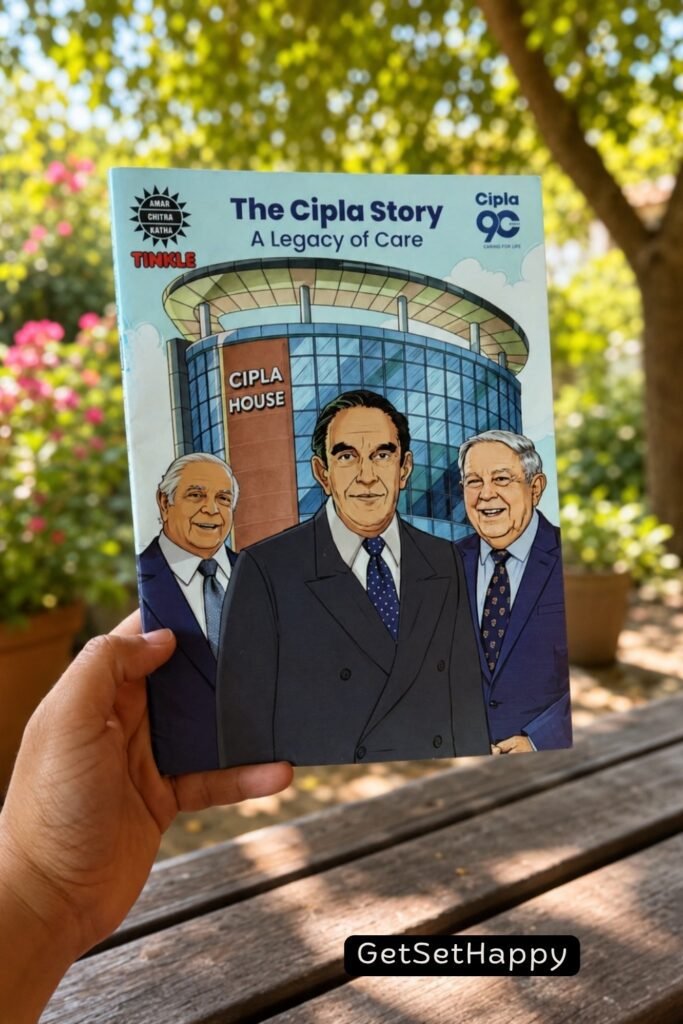
The message I carried with me after finishing the book was simple: healthcare is about more than treating illnesses. It’s also about supporting people through some of life’s most difficult moments.
Whether the stories explored affordable HIV medicines, rare diseases, palliative care, or a young boy learning to live confidently with asthma, each one returned to the same idea, that healthcare is ultimately about people.
I also appreciated how accessible the comic felt. The illustrations keep serious subjects engaging without taking away from their emotional depth, and the storytelling remains warm without becoming overly dramatic.
Overall, The Cipla Story offers an easy-to-read look at healthcare through the lens of human experiences. Rather than trying to impress with achievements alone, it focuses on the moments where compassion, determination, and care come together—and that’s what makes it memorable.
You can read it here: https://www.cipla.com/comic-book-view.




8 Comments
Sapna
August 14, 2026 at 2:06 pmWhat a lovely reminder that healthcare is ultimately about people, not just medicines. The human stories behind Cipla’s journey make this one worth reading.
Aadarsh
August 14, 2026 at 2:07 pmStories like this remind us that meaningful businesses are built on purpose, people, and the courage to keep going.
eChabi
August 17, 2026 at 7:58 pmSome stories are more than a casual read. You have nicely summarised, thank you.
Deepti Shokeen
August 17, 2026 at 8:06 pmWhat a beautifully human perspective on Cipla’s journey. I especially liked the emphasis on how healthcare goes beyond medicines—it’s about accessibility, empathy, dignity, and putting people at the centre. A meaningful read!
Aditya
August 17, 2026 at 8:25 pmReally enjoyed reading this. What stayed with me is how Cipla’s story is as much about people and purpose as it is about business. The focus on making healthcare more accessible gives the journey a very different kind of meaning. A genuinely inspiring read.
Jyotin
August 18, 2026 at 11:26 pmThis is a good amd inspiring read. You have nicely summarised, thank you.
Pooja Gupta
August 18, 2026 at 10:31 pmThanks Jais for highlighting about the importance of human touch and care over the treatment of an illness. It’s easy to get the treatment but difficult to get the care of own people.
Romita Romita
August 19, 2026 at 8:35 pmReading” The Cipla stories “showed the other side.A side where human life became centre either by making affordable medicines for HIV patients or making palliatives to help patient get relief from pain,etc.Usually what is at centre is business but the Cipla stories indeed showed the other side, where human life is at centre!!