
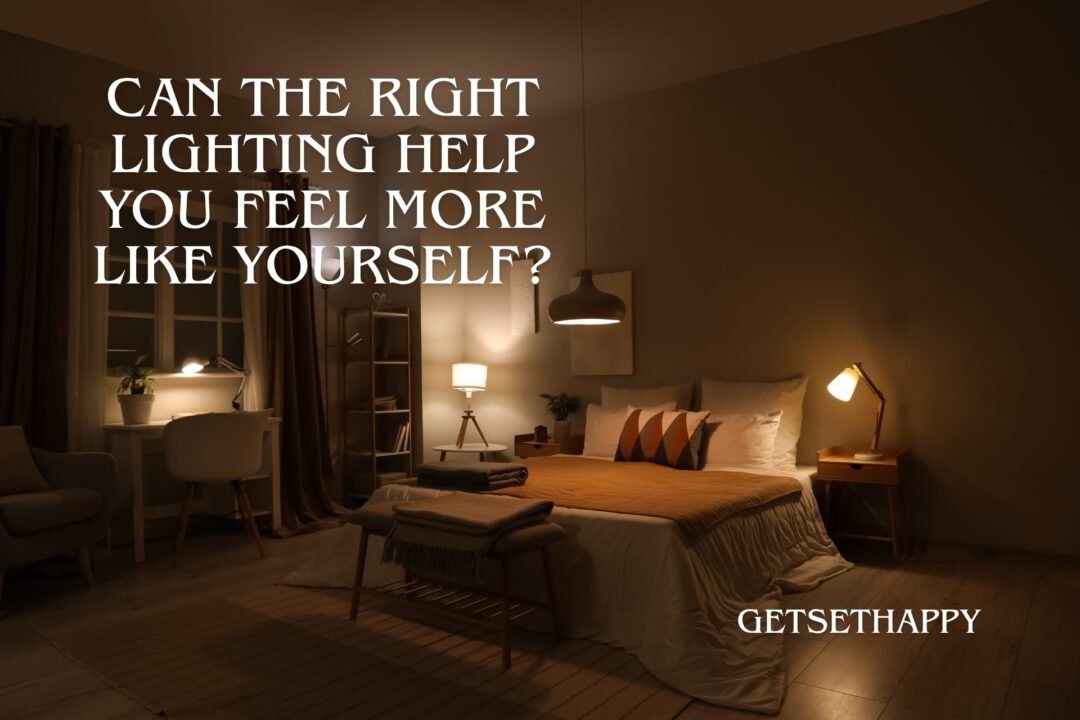
Most of us think of lighting as purely functional: a bulb to light up the room, a lamp to help us read, and that’s about it. But the truth is, lighting does so much more than illuminate our homes—it shapes how we feel, how we sleep, and even how deeply we connect with ourselves.
The right home lighting system can transform your space into a sanctuary that supports inner peace, better sleep, and overall well-being. Let’s explore how light can do more than brighten a room—it can brighten you.
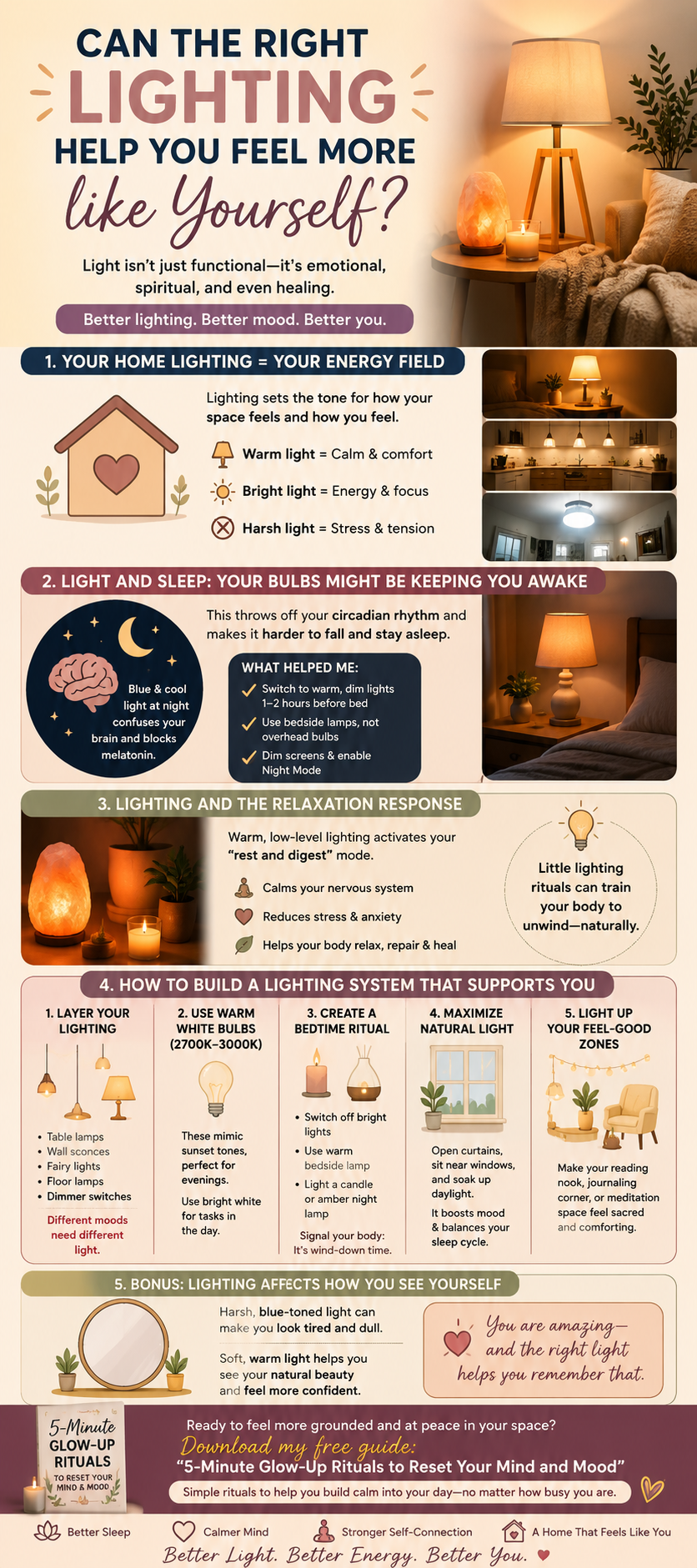
Your Home Lighting = Your Energy Field
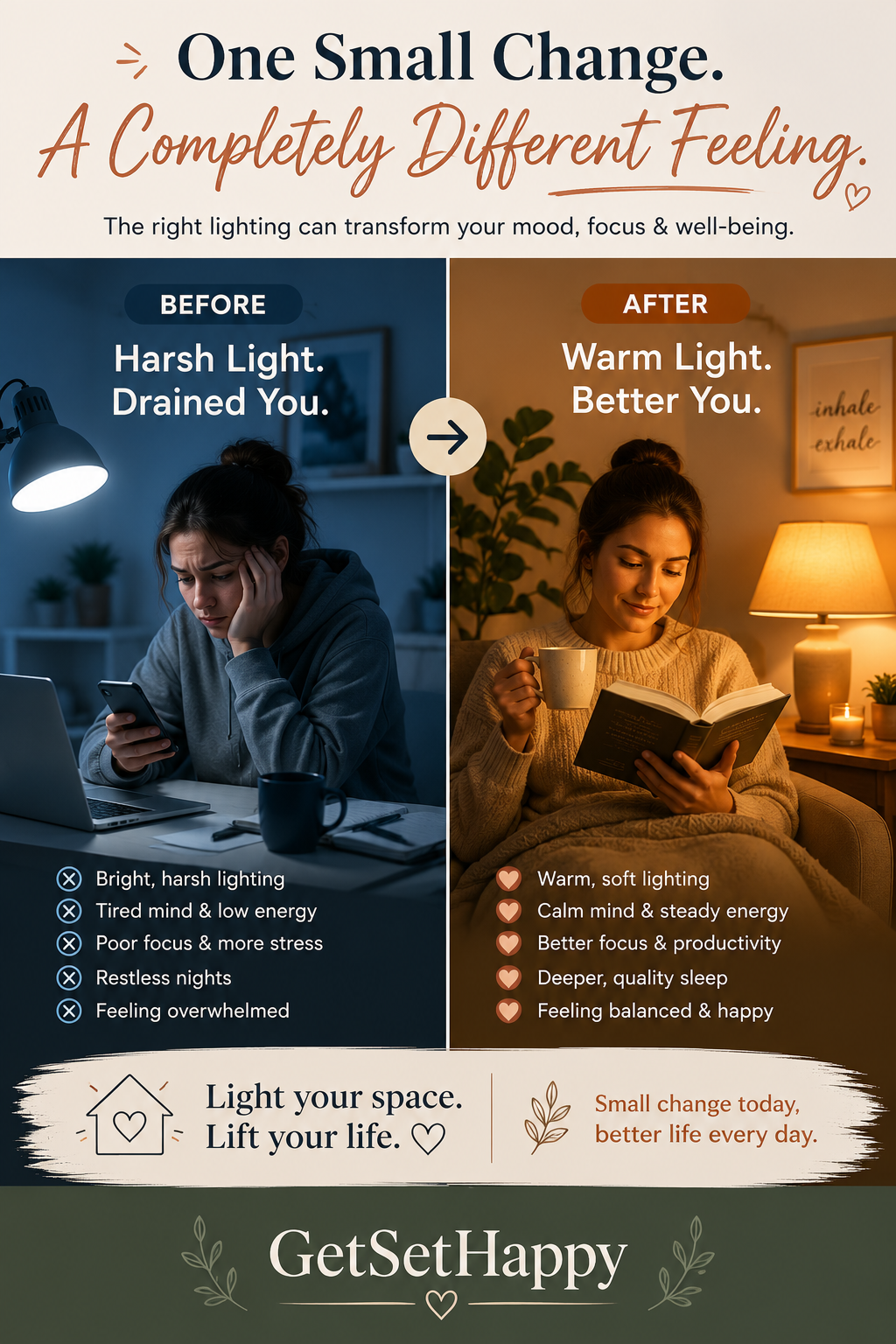
Every home has an energy field, and lighting plays a crucial role in how that field feels.
- A warm bedside lamp that calms you.
- A bright kitchen light that motivates you to cook and move.
- A harsh ceiling bulb that you switch off when you’re ready to relax.
Our brains and bodies are deeply sensitive to light. It influences our circadian rhythm, nervous system, and emotional state. When our lighting isn’t aligned with what we need, it can throw us off balance—especially when it comes to relaxing, resetting, and feeling grounded.
Light and Sleep: Why Your Bulbs Might Be Keeping You Awake
Sleep is the foundation of well-being, yet so many of us unknowingly sabotage it with poor lighting choices.
Our bodies follow the circadian rhythm—a natural sleep-wake cycle designed to sync with sunrise and sunset. When it gets dark, our brain produces melatonin, the hormone that helps us sleep.
But modern lighting, especially cool-toned white LEDs, mimics daylight even at night. That confuses the brain, suppresses melatonin, and makes falling asleep harder.
Tips for Sleep-Friendly Lighting:
- Switch to warm, dim lights in the evening.
- Use lamps instead of harsh overhead bulbs before bed.
- Reduce blue light exposure with Night Mode on devices.
These small shifts can dramatically improve your sleep quality and leave you feeling more refreshed.
Lighting and the Relaxation Response
Soft, ambient lighting can do wonders for relaxation. Warm tones activate the parasympathetic nervous system—the “rest and digest” mode that allows your body to slow down, heal, and recover.
Candles, salt lamps, and dimmable lights send a signal to your brain: You’re safe. You can relax now.
Creating nightly lighting rituals—like dimming lamps or lighting a candle—helps your body associate light cues with rest, making it easier to unwind.
How to Build a Lighting System That Supports You?
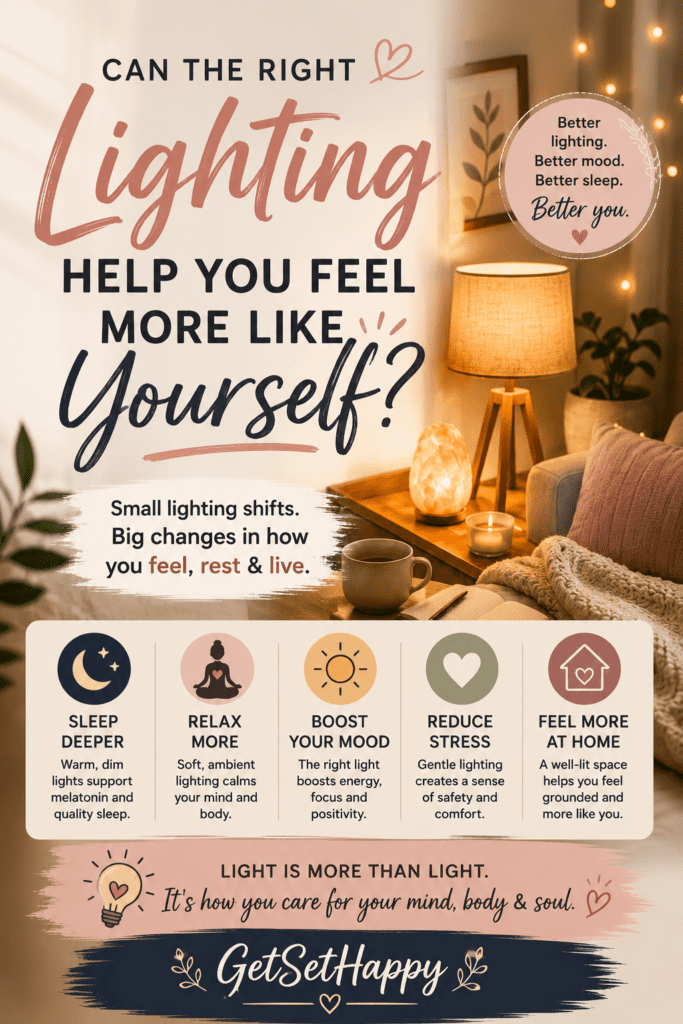
The goal isn’t to design a Pinterest-perfect home. It’s to create an environment that feels safe, energizing in the morning, and peaceful at night.
1. Layer Your Lighting
Don’t rely on one ceiling light. Add:
- Floor lamps
- Table lamps
- Wall sconces
- Fairy lights
- Dimmer switches
Different times of day call for different moods—so give yourself options.
2. Use Warm White Bulbs (2700K–3000K)
Cool whites are stimulating. Warm whites mimic the glow of sunset—perfect for winding down.
3. Create a Bedtime Lighting Ritual
- Turn off bright lights an hour before bed.
- Switch to a warm bedside lamp or salt lamp.
- Use an amber-glow night light for relaxation.
4. Maximize Natural Light During the Day
Open curtains, work near a window, and let natural light boost your mood and regulate your circadian rhythm.
5. Light Up Your “Feel-Good Zones”
Your reading nook, journaling corner, or meditation space should feel sacred. When you light these spaces with intention, they become more inviting.
Lighting and Self-Perception: How You See Yourself
Lighting doesn’t just affect how you feel—it also impacts how you see yourself.
Harsh blue-toned lighting (common in bathrooms or fitting rooms) can make us look pale, tired, or drained. That, over time, chips away at self-esteem.
When you switch to softer, warmer lighting around your mirror or workspace, you’ll likely feel better about your reflection—not because you changed, but because the light did.
Final Thoughts: Light Is More Than Light
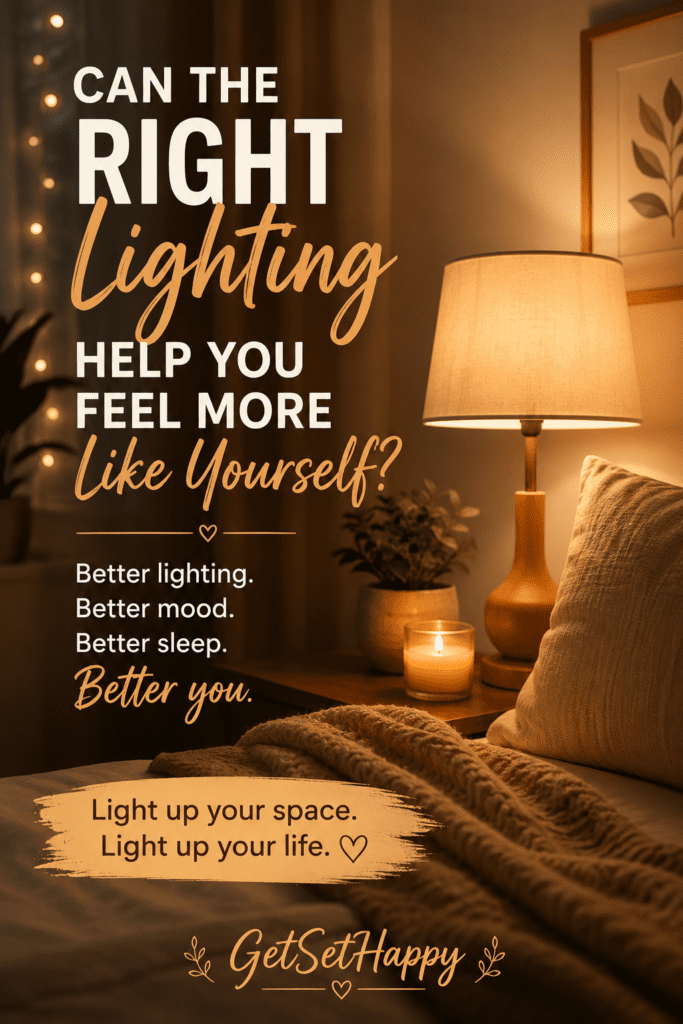
Lighting isn’t just functional—it’s emotional, spiritual, and even healing.
The lighting you choose can either support your growth or drain your energy. It can either soothe you or keep you wired. Most importantly, it can either bring you closer to your true self—or away from it.
So if you’ve been feeling restless, tired, or disconnected—it may not just be your busy schedule. It might be your lights.
The good news? That’s something you can change.
Frequently Asked Questions (FAQs)
1. Can lighting really affect my mood?
Yes! Warm, soft lighting helps calm the nervous system, while harsh or cool lighting can increase stress and alertness.
2. What type of lighting is best for sleep?
Dim, warm-toned lights (2700K–3000K) are best before bed, as they support natural melatonin production.
3. Is natural light better than artificial light?
Absolutely. Exposure to natural light during the day helps regulate your circadian rhythm, improves mood, and boosts productivity.
4. Can the wrong lighting make me feel anxious?
Yes. Bright, flickering, or overly harsh lighting can overstimulate the brain and increase anxiety in sensitive individuals.
5. What’s the best way to set up lighting in small apartments?
Use layered lighting—like table lamps, floor lamps, and string lights—to create zones and moods without relying on one ceiling fixture.
6. Does lighting affect how we look in mirrors?
Definitely. Warm, soft lighting flatters skin tones, while cool lighting can highlight imperfections and make you look washed out.



No Comments