
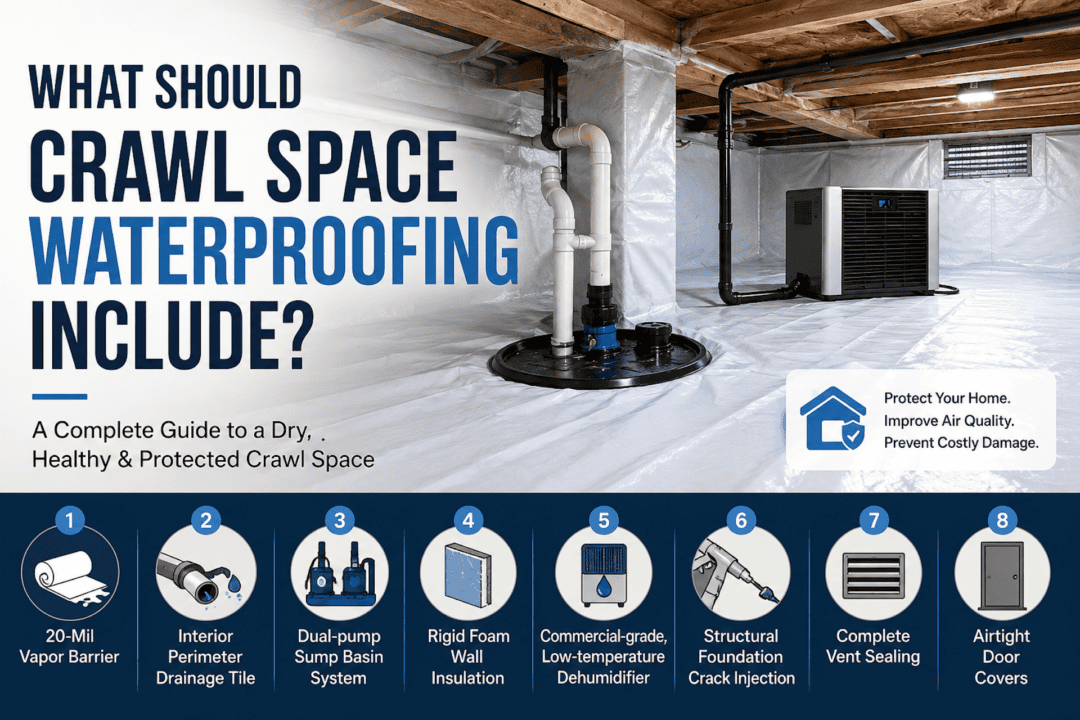
A dry crawl space depends on more than placing plastic over the soil. Effective waterproofing controls ground moisture, captures incoming water, limits humid air, and protects the foundation from damage. Each part of the system should work together so the area remains stable through seasonal rain, heat, and changing soil conditions.
Heavy-duty 20-Mil Vapor Barrier
Durable vapor barriers separate the crawl space from damp soil, which can release several gallons of moisture into the air over time. A 20-mil liner offers greater puncture resistance than thin plastic sheeting, making it better suited for areas with gravel, debris, service traffic, or uneven ground.
Proper installation also matters as much as material thickness. Seams should overlap and remain securely sealed, while the liner should extend around piers and other obstructions without leaving exposed gaps. Homeowners searching for crawl space waterproofing near me should ask whether the proposed system covers the ground completely and includes fastening methods that prevent shifting.
Interior Perimeter Drainage Tile
Perimeter drainage tile collects water that enters near the foundation walls and directs it toward a sump basin. Installers typically place the drainage channel along the inside edge of the footing, where seepage often appears after heavy rainfall or rising groundwater.
Reliable drainage must follow a planned slope and remain protected from soil blockage. Filter fabric, clean stone, and correctly sized piping help maintain steady flow. Without this drainage path, water may collect beneath the liner, create pressure against walls, or spread across low areas of the crawl space.
Dual-pump Sump Basin System
Two pumps provide extra protection during severe storms, pump failure, or power-related issues. The primary unit handles normal water flow, while the secondary pump activates when the first cannot keep up or stops working.
Correct basin sizing prevents the pumps from cycling too frequently and wearing out early. Check valves should keep discharged water from flowing back into the pit, and the outlet line should release water far enough from the foundation to prevent reentry. Experienced crawl space repair contractors may also recommend alarms or battery backup systems for homes with repeated flooding concerns.
Rigid Foam Wall Insulation
Rigid foam insulation helps control heat transfer through foundation walls without absorbing moisture as easily as exposed fiberglass. Closed-cell boards can also reduce condensation by keeping interior wall surfaces closer to the crawl space air temperature.
Careful fitting is needed around pipes, piers, rim joists, and utility penetrations. Fire-safety requirements may affect which products and coverings are allowed, so installation should follow local codes and manufacturer guidance. Property owners considering crawl space repair in Huntsville AL may benefit from wall insulation because warm, humid conditions can create condensation on cooler masonry surfaces.
Commercial-grade, Low-temperature Dehumidifier
Standard household dehumidifiers may struggle in crawl spaces because they are not designed for low-clearance areas, cooler temperatures, or continuous operation. Commercial-grade units remove moisture more efficiently and can drain automatically without requiring someone to empty a collection tank.
Accurate sizing depends on the crawl space dimensions, moisture load, air leakage, and drainage conditions. Oversized equipment may cycle too often, while an undersized model may run constantly without reaching the target humidity. A permanent condensate line and accessible filter location also make routine maintenance easier.
Structural Foundation Crack Injection
Foundation cracks can allow water to enter through concrete walls, especially during prolonged rain or changes in groundwater pressure. Injection repair fills the crack from inside the wall using materials selected for the opening’s width, movement, and moisture conditions.
Epoxy may restore strength in stable structural cracks, while flexible polyurethane can seal openings that experience minor movement or active seepage. Diagnosis should come before sealing because horizontal cracks, displacement, or recurring movement may point to a larger foundation concern. A search for crawl space repair near me should lead to professionals who evaluate the cause rather than simply covering the visible line.
Complete Vent Sealing and Airtight Door Covers
Open foundation vents once served as a common method for drying crawl spaces, but humid outdoor air can worsen moisture problems during warm weather. Sealing these openings helps create a controlled environment where drainage, insulation, and dehumidification can perform consistently.
Airtight access doors should resist rain, pests, and outside air while remaining easy to open for inspections. Gaskets, durable frames, and secure latches reduce leakage around the entrance, which is often one of the weakest points in an encapsulated system. Property owners looking for dependable crawl space repair, waterproofing, foundation work, and moisture control can turn to Kennedy and Sons for solutions tailored to the conditions beneath their home or building.




No Comments