
If you’ve made it to the embryo transfer stage of IVF, congratulations. You’ve endured the hormone injections, the frequent blood draws, and the surgical egg retrieval. Now, you’ve arrived at the most critical moment: bringing the embryo home.
But before that happens, you and your doctor have a strategic decision to make. Should you do a Fresh Embryo Transfer or a Frozen Embryo Transfer (FET)?
In the early days of IVF, “fresh” was the gold standard. However, thanks to a flash-freezing technology called vitrification, frozen transfers have become the preferred choice for many top clinics. Here is a breakdown of how both methods work and how to decide which is right for your body.
1. The Fresh Embryo Transfer
In a fresh transfer, the embryo is placed into the uterus, usually 3 to 5 days after the egg retrieval.
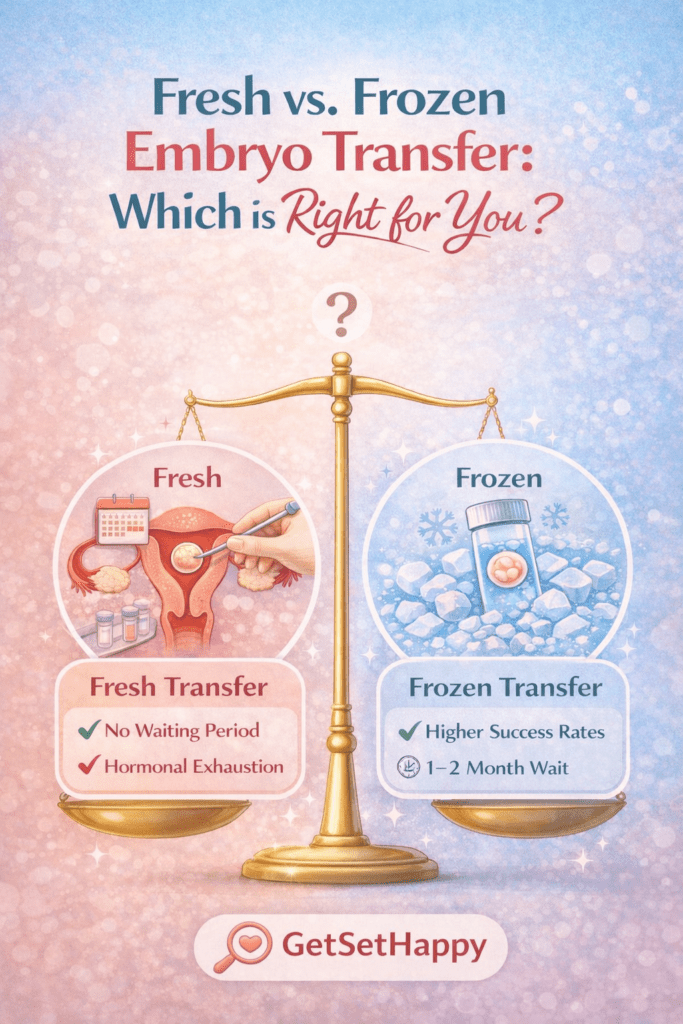
- The Pro: Speed. You don’t have to wait an extra month or two to attempt pregnancy. For many, the emotional relief of moving straight to the transfer is a huge plus.
- The Con: Hormonal Exhaustion. During egg retrieval, your ovaries are stimulated to produce multiple eggs, sending your estrogen levels soaring. This can create a ‘non-natural’ environment in the uterine lining, which some studies suggest may be less receptive to an embryo.
- The Risk: OHSS. If you are at risk for Ovarian Hyperstimulation Syndrome (OHSS), a fresh transfer can worsen the condition if you become pregnant.
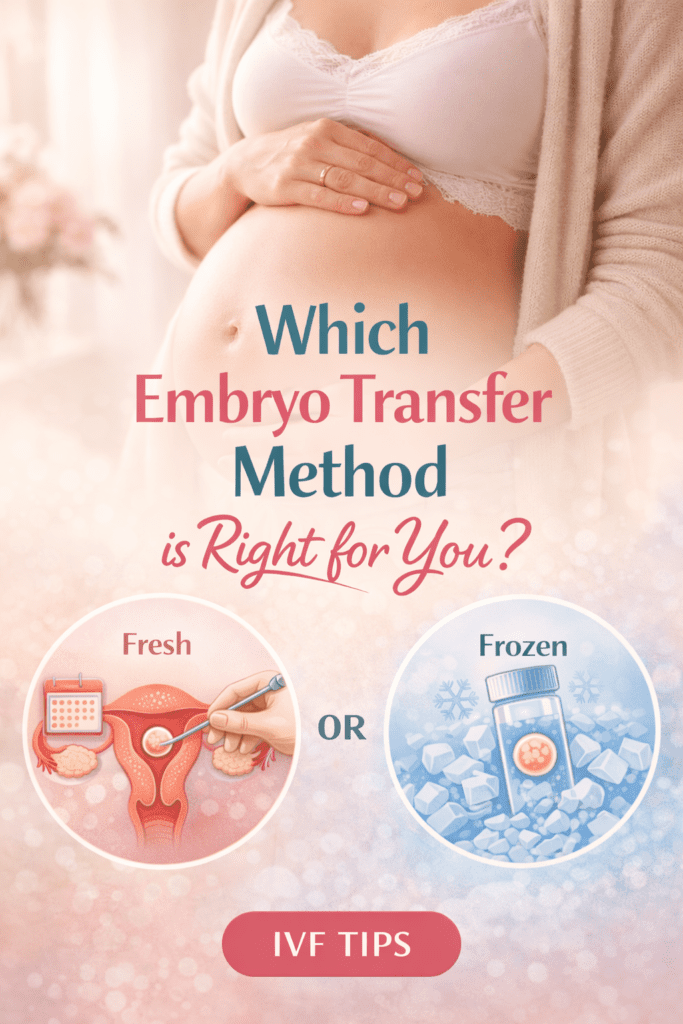
2. The Frozen Embryo Transfer (FET)
With an FET, the embryos are frozen and stored. You wait at least one full menstrual cycle for your hormone levels to return to baseline before the transfer takes place.
- The Pro: A Calmer Environment. Your body has time to recover from the retrieval. Your doctor can use medication to perfectly prime your uterine lining to ensure it is at the ideal thickness and receptivity.
- The Pro: Genetic Testing (PGT-A). If you want to screen embryos for chromosomal abnormalities, you must freeze them. The lab needs time to process the results, which usually takes 1–2 weeks.
- The Con: The Wait. Waiting an extra 4 to 6 weeks can feel like an eternity when you’ve already been trying for years.
Comparing the Two
| Feature | Fresh Transfer | Frozen Transfer (FET) |
| Timing | ~5 days post-retrieval | 1–2 months post-retrieval |
| Uterine Lining | Influenced by retrieval meds | Highly controlled/optimised |
| Genetic Testing | Not usually possible | Standard practice |
| Cost | Usually cheaper (no storage fees) | Extra costs for freezing/storage |
| Success Rates | Slightly lower in some demographics | Often higher due to optimal lining |
Which One Should You Choose?
While every patient is unique, here are the general guidelines doctors use to make the call:
You might choose Fresh if:
- You have a lower egg yield and aren’t worried about OHSS.
- Genetic testing isn’t a priority for you.
- Your uterine lining looks perfect during the retrieval phase.
- You are eager to move forward as quickly as possible.
You might choose Frozen (FET) if:
- You produced a high number of eggs (15+) and are at risk for OHSS.
- You are over 35 and want to perform PGT-A testing to ensure the embryo is chromosomally healthy.
- Your hormone levels (like progesterone) rose too early during the stimulation phase, making the lining less receptive.
- You want to ‘batch’ embryos for future siblings.
The best method for you is the one that gives your embryo the highest chance of implantation. For some, that’s a quick fresh transfer; for others, it’s a carefully timed frozen cycle that lets the body rest. At Zita West, we have supplements that support your IVF journey, helping you create a healthy environment for your embyos. Get in touch with our team of fertility specialists for more information!




No Comments